For decades, popular culture portrayed Neanderthals as clumsy brutes wandering ice age landscapes with rudimentary stone clubs. This outdated stereotype ignored a simple reality of the archaeological record: most everyday prehistoric materials simply decay over time. Recent discoveries at the Abric Romani rock shelter in northeastern Spain are dismantling these persistent assumptions, revealing that Neanderthals possessed sophisticated woodworking abilities and deep technical foresight.
Rethinking the Primitive Caveman Stereotype
The narrative of Neanderthals as intellectually inferior cousins of modern humans has steadily unraveled over the past two decades. Previous discoveries confirmed that they buried their dead, used personal ornaments, managed fire, and utilized complex hunting strategies. Yet, visual depictions often lag behind scientific consensus, still showing crude figures struggling against nature.
The rare collection of wooden artifacts recovered from Abric Romani pushes back firmly against that legacy. Instead of relying solely on sharp stones, these hominins treated wood as a primary medium for manufacturing specialized gear. Woodworking requires an abstract understanding of grain structure, tensile strength, and curing processes. By viewing these individuals as intentional craftsmen rather than opportunistic foragers, researchers are finally giving Neanderthal cognition the credit it deserves.
The Unique Conditions Preserving Wood at Abric Romani
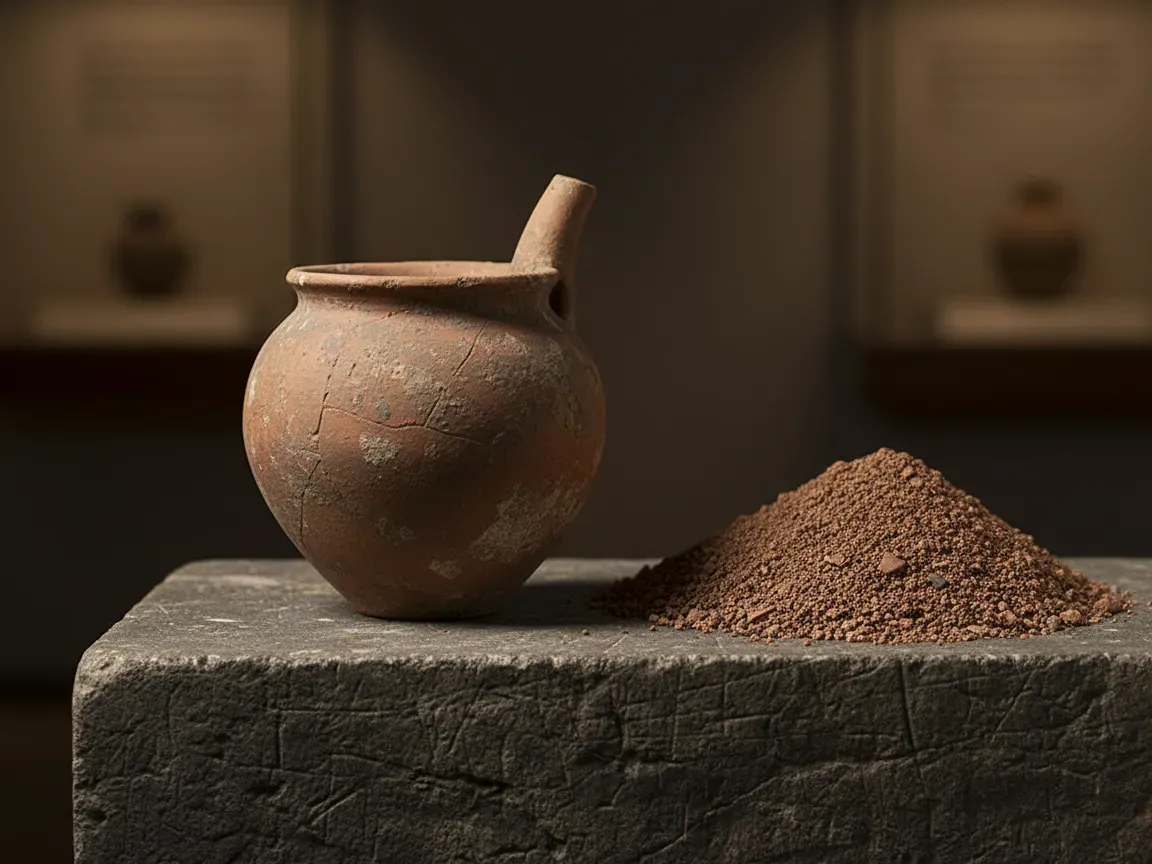
Organic matter like wood, bark, and plant fiber disintegrates rapidly in most geological settings. Acidic soils, fungal activity, and shifting temperatures usually destroy plant-based implements within a few decades, leaving behind only imperishable stone and mineralized bone.
Abric Romani provided a rare geological anomaly:
- Constant spring activity deposited rapid layers of calcium-rich tufa over discarded materials.
- Travertine formations formed protective mineral casings around abandoned organic objects before bacterial rot could consume them completely.
- Continuous sedimentation shielded delicate impressions and surviving fibers from oxygen, stabilizing the microenvironment for tens of thousands of years.
Because of this unique hydrological setting, researchers did not just uncover stone scrapers; they found negative casts and preserved structural remnants of wood used directly around domestic hearths. The site offers an exceptional window into organic technologies that have vanished everywhere else.
What the Shaped Artifacts Reveal About Neanderthal Craftsmanship?
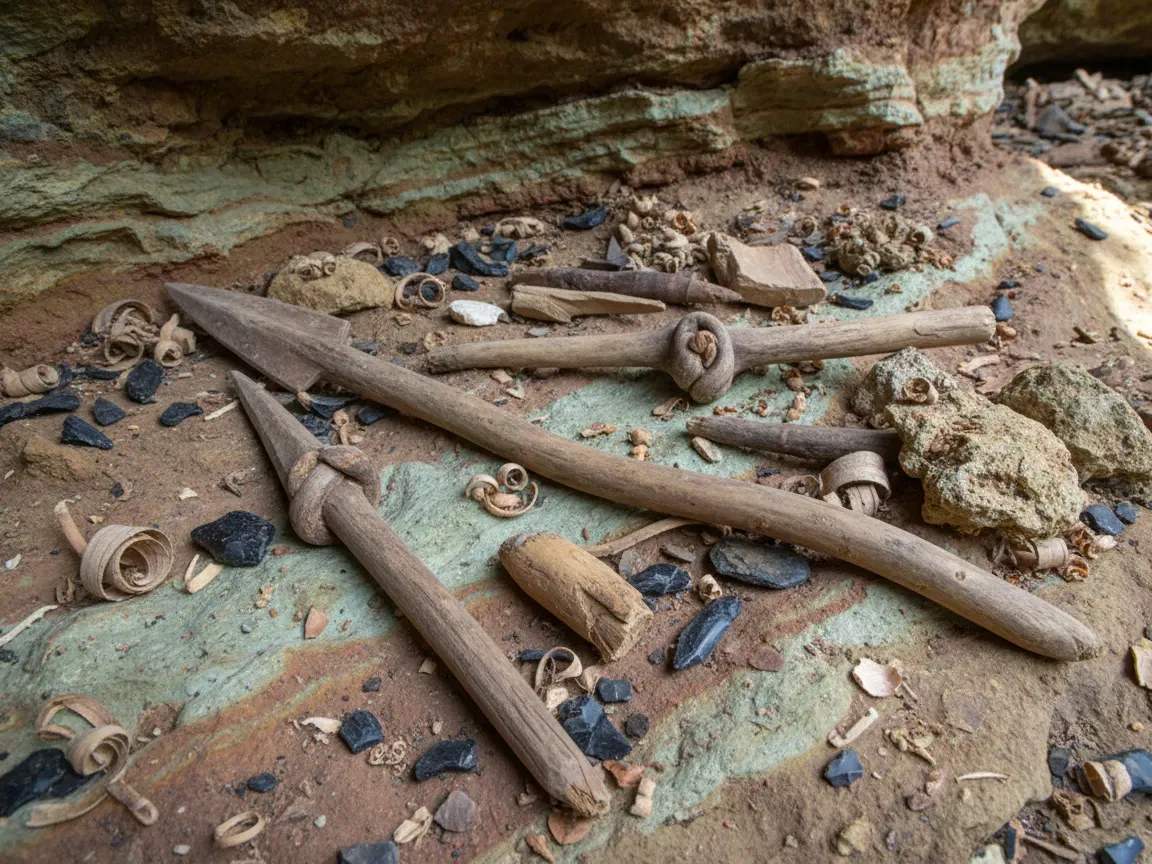
Analyzing the shaped items at Abric Romani reveals deliberate labor and methodical planning. The finds include pointed digging sticks, heavy wooden mallets, and shaped handles intended to secure stone blades.
These artifacts demonstrate that Neanderthals did not merely pick up fallen branches. They deliberately sought specific tree species known for flexibility or density, such as juniper, boxwood, and pine. Processing these woods involved:
- Stripping outer bark cleanly to prevent premature splintering.
- Carefully trimming side branches flush with the shaft.
- Using controlled heat exposure around hearths to harden tips and make wood easier to carve.
- Shaping working surfaces with stone flakes to achieve precise leverage and grip.
The production of composite tools, combining wooden shafts with stone tips bound by plant fiber or natural resin, indicates a multi-step design process. Neanderthals envisioned the final tool, gathered the necessary raw components from varied habitats, and executed a sequence of tasks that spanned multiple days.
Overcoming the Preservation Bias in Modern Archaeology
The historical dominance of the Stone Age label reveals more about geological preservation than prehistoric culture. Because flint, chert, and quartzite survive indefinitely, early archaeologists naturally built evolutionary frameworks around lithic typologies.
This preservation bias led to skewed assessments of ancient intelligence. Entire cultures were categorized by stone knapping styles, while their likely vast repertoires of woven baskets, wooden containers, traps, and bark shelters disintegrated into dust. At Abric Romani, the presence of stone tools directly beside the wooden implements they helped carve demonstrates that stone was often merely a secondary tool used to shape the primary wooden gear. Wood, not rock, was the foundational medium of Paleolithic daily life.
How Organic Artifacts Reshape Educational Curriculums on Human Evolution?
Classrooms and museum galleries have traditionally introduced human evolution through linear timelines anchored to stone handaxes. As the findings from sites like Abric Romani enter academic literature, educational programs must adjust how they present hominin capabilities to students.
Textbooks are beginning to replace simplistic imagery with lessons that highlight complex planning, environmental literacy, and craftsmanship. Emphasizing organic tool manufacture helps students grasp that ancient peoples adapted to their environments using integrated systems of plant-based materials, animal hides, and stone edges. This nuanced approach encourages learners to question how missing data influences our understanding of the deep past, teaching critical thinking about how evidence survives.
Why a Fragile Medium Tells the Strongest Story?
The recovered woodwork from Abric Romani permanently shifts how we interpret our evolutionary relatives. When researchers evaluate ancient hominins exclusively by durable mineral remains, they capture only a fraction of their daily ingenuity. Finding delicate wooden equipment intact bridges the gap between static museum displays and the resourceful people who once sat beside those Spanish hearths.
Appreciating Neanderthal woodworking provides a more balanced view of our shared technological history. Innovation did not begin with modern industrial materials, nor was it invented solely by Homo sapiens. It began with early humans learning how to read the grain of a branch, using patience and practiced skill to shape the natural world around them.